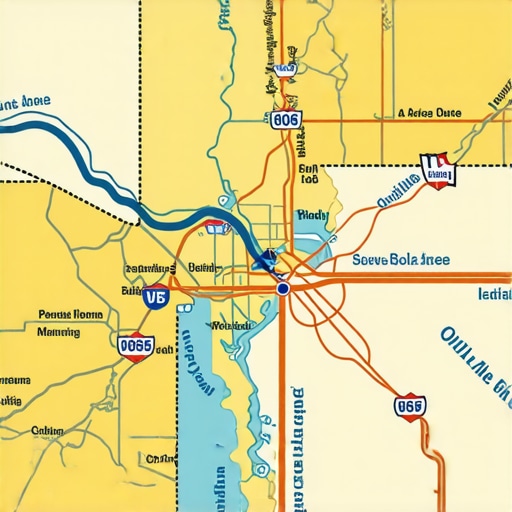
The Service Area Page Strategy for Idaho Pros Looking Beyond Boise
For many contractors and professionals in the Treasure Valley, there is a frustrating phenomenon I like to call the “Boise Bubble.” You’ve invested heavily in google business profile seo, your shop is located near Capitol Boulevard, and you dominate searches within a three-mile radius. However, the moment a potential client in Meridian, Eagle, or Nampa searches for your services, you vanish from the Google Map Pack. Despite being willing to drive 20 minutes down I-84, Google treats your business as if it doesn’t exist once the user crosses the city limits.
The “Boise Bubble” and the Proximity Filter
As a fractional SEO consultant, I see this daily. Idaho pros are often invisible in the very suburbs where the highest-value projects are located. This happens because of the “Proximity Filter,” a core component of Google’s local algorithm. To understand why you aren’t ranking, we have to look at the three pillars of local search: Proximity, Relevance, and Prominence. While you can’t easily change your physical proximity to a user in Nampa if your office is in Boise, you can drastically influence your Relevance and Prominence through a sophisticated service area page strategy.
If you’ve ever wondered why your rankings drop off a cliff the moment you leave downtown, you should read about the Real Reasons Your Boise Shop Isn’t Showing Up in Local Map Searches. Understanding the proximity barrier is the first step toward breaking it.
Why Your Google Business Profile (GBP) Isn’t Enough
Your Google Business Profile is essentially a digital anchor. It is tied to a specific latitude and longitude. For a storefront business, this is straightforward. But for an Idaho Service Area Business (SAB) – like a plumber, electrician, or landscaper – this anchor can feel like a ball and chain. Many owners attempt to solve this by simply listing every city in the “Service Areas” section of their GBP dashboard. While this tells Google where you work, it does very little to tell Google that you are relevant to those specific locations.
To “travel” beyond your physical address, you need a robust website-side strategy that supports your profile. Google’s algorithm looks for “local justification.” If a user in Eagle searches for “HVAC repair,” Google wants to see a landing page on your website that proves you have a footprint in Eagle. Without these dedicated pages, your GBP is just a floating pin with no context. This is where professional google business profile optimization becomes mandatory. You must bridge the gap between your physical location and your service territory.
It is a standard move for SABs to hide their physical address to avoid confusing customers, but this often limits reach. Without city-specific pages, you are essentially telling Google, “I’m a Boise business that occasionally wanders into Meridian.” You want to tell Google, “I am the premier choice for Meridian residents.”
The Anatomy of a High-Converting Idaho City Page
A common mistake Idaho business owners make is creating “thin” city pages – pages with 200 words of generic text where only the city name changes. This is a recipe for a “duplicate content” penalty. To rank in the Map Pack for cities where you don’t have an office, your city pages must be authoritative and hyperlocal. Here is the blueprint for a page that actually converts and ranks.
1. Hyperlocal H1s and Subheaders
Don’t just use “Plumber in Meridian.” Use something that reflects the local intent, such as “Top-Rated Emergency Plumber Serving Meridian, ID.” Your subheaders should also reference specific neighborhoods or local concerns (e.g., “Hard Water Solutions for Nampa Homeowners”).
2. Local Landmarks and Geographic Context
Google’s AI is smart enough to associate landmarks with specific regions. If your Meridian service page mentions proximity to The Village at Meridian or Kleiner Park, it signals geographic relevance. For a Nampa page, mentioning Lake Lowell or the Ford Idaho Center provides the “geographically-relevant content” that acts as a game-changer for small businesses in competitive markets. This isn’t just for SEO; it builds immediate trust with the local customer who sees you actually know their area.
3. Embedded Google Maps and Service Area Shapes
Don’t just link to a map; embed a custom Google Map that highlights your service boundary within that specific city. This reinforces the “ServiceArea” schema we will discuss later. It provides a visual confirmation to the user that they are within your reach.
4. City-Specific Reviews and Testimonials
This is the “secret sauce.” If you are building a page for Eagle, ID, you should feature reviews specifically from Eagle residents. Mentioning the street name or neighborhood in the testimonial (with permission) adds an extra layer of local social proof. To learn more about how visual evidence supports this, check out The Photo Strategy That Actually Gets Idaho Shop Doors Swung Open.
Technical SEO for Service Area Dominance
Beyond the content, the “under the hood” elements of your website must be tuned for google maps ranking service success. The goal is to create a digital map that Google’s crawlers can follow from your Boise headquarters to your outlying service areas.
Schema.org Markup: You must use LocalBusiness and ServiceArea schema. This is structured data that tells Google explicitly: “My main office is at X, but I provide Y service to the following GeoShapes.” By defining your service area in the code, you provide the clarity the algorithm needs to rank you in the 3-pack for distant queries.
NAP Consistency: Your Name, Address, and Phone number (NAP) must be consistent across the web, but for service area pages, you should also include the local phone number if you have one, or clearly state your central dispatch number. Consistency across directories like Yelp, Angi, and the BBB is critical. Utilizing local seo tools can help you audit these citations to ensure there are no discrepancies that could dilute your authority.
Internal Linking: Your city pages should not be “orphan pages.” They need to be linked from your main navigation or a dedicated “Areas We Serve” footer. This passes “link juice” from your high-authority homepage down to your hyperlocal city pages. Google allows you to lead with core services in the first sentence of your description, so make sure your internal anchors reflect your primary keywords like “HVAC repair” or “family law.”
2026 Trends: Proximity, Interaction, and Review Diversity
As we move into 2026, the local search landscape in Idaho is shifting. The old strategy of “more reviews = higher rank” is dying. Google is now prioritizing Review Diversity and Interaction Rates.
What does this mean for a pro in the Treasure Valley? It means that 500 five-star reviews from Boise won’t help you rank in Caldwell as much as 10 reviews from Caldwell residents will. Google is looking for a “diversity of location” in your review profile. They want to see that people all over the valley are interacting with your business. For a deeper dive into this shift, see Why Boise Shop Ranks Now Depend on Review Diversity [2026].
Furthermore, “Interaction Rates” – such as clicks to call, requests for directions, and website clicks – are becoming weighted more heavily than proximity. If users in Meridian consistently skip over the “closer” plumber to click on your Boise-based business because your city page is more helpful, Google will eventually move you up in the rankings. You can effectively “out-interact” the proximity filter. Learn the technical details of this in our guide on How Boise Pros Beat the 2026 Google 3-Pack Distance Filter.
Common Pitfalls: Why Idaho City Pages Fail
Even with the best intentions, many Idaho businesses sabotage their google business profile seo by falling into two traps: keyword stuffing and duplicate content.
The Duplicate Content Trap: If your Meridian page and your Nampa page are identical except for the city name, Google will likely ignore both. Each page needs unique insights. Mention the specific types of homes in Meridian (newer construction, specific HVAC needs) versus the older historical homes in North Nampa. This uniqueness is what builds relevance.
Keyword Stuffing: Some owners try to “force” the rank by putting their city name in their business title on the GBP (e.g., “Boise Plumbers – Meridian Branch”). This is a violation of Google’s Terms of Service and can lead to immediate suspension. As I’ve noted before, Why Stuffing Keywords into Your Business Name Actually Hurts Your Boise Map Rank – it’s a short-term “hack” that leads to long-term disaster.
Instead of hacking the name, focus on rank higher on google maps by building authentic authority through your website’s service area pages.
Conclusion & Action Plan
Dominating the Idaho market requires looking beyond the “Boise Bubble.” By combining a perfectly optimized Google Business Profile with high-quality, hyperlocal service area pages, you can effectively expand your reach into Meridian, Eagle, Nampa, and beyond. The future of local SEO belongs to those who provide the most relevance to the user, regardless of the physical distance.
Your action plan is simple: Audit your current visibility. Are you appearing where your customers are, or just where your office is? If you’re ready to expand your footprint, Contact Us today to build a strategy that moves the needle. To stay ahead of the competition, ensure you are using the latest SEO Viper Tools to monitor your rankings across the entire Treasure Valley.